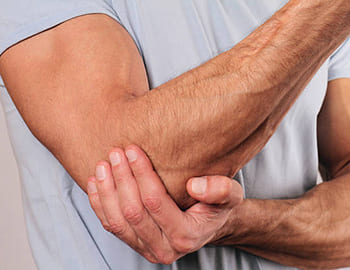
Expert Care for Elbow Trauma and Injury Recovery

Best orthopedic doctor near me

The elbow joint may seem to be very simple, but the fact of the matter is that it is an incredible joint. It is able to bend, to straighten, to turn and to carry the weight of your body. And thus, it is quite easy to get injured. It could be that you fell on a wet floor, hit it against the side of a counter or wore it out in the gym. It may be a sprain, something that you believe will pass by itself. Or maybe a dislocation or a tear of a ligament.

Most people do not give a second thought about elbow pain. “It will go away,” they think. However, weeks pass and perhaps before you can see it, you are pouring coffee and carrying bags. This explains the reason why we need to act promptly rather than later. In this case we are seeking to restore strength, range and comfort not only to be able to heal the injury but also to enable your arm to feel like it once belonged to you again.
Understanding Elbow Injuries

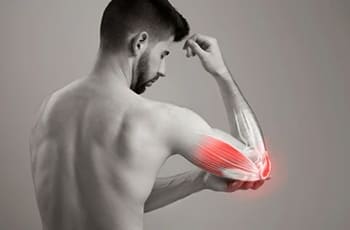
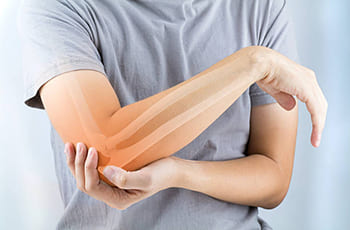
The humerus, the radius and the ulna have ligaments, tendons and muscles that connect the three bones together. It is strong, but it is also complicated and that is why it can get injured in so many different ways.

Some injuries occur quickly. You have perhaps fallen and landed on your hand and there is pressure on your elbow. There are injuries that are acquired over time like playing tennis or lifting heavy items. The tendons and ligaments may get swollen, stretched and sometimes torn and the nerves may be affected and give a tingling sensation to your hand or your wrist.

The thing is that even the little one may be a real pain. This hurts when you attempt to grab a shelf, shake the hand of someone or twist a doorknob. It is absolutely vital to the early treatment of an injury.

Orthopedic Hip Specialist
Orthopedic Surgeons

Spotting the Signs

How do you know if your elbow needs attention? Well, pain is one thing, but do not just ignore swelling, bruising or a lump on your elbow if it was not there before. In case you cannot bend your arm or remember it straight, this is a problem. Painful or numb in your hand or fingers? It might be that your nerves are involved.

The symptoms are extremely insidious at other times. You know that you feel uncomfortable when you are carrying a grocery and pan and you are only thinking that you are overworking the muscles. Nevertheless, these are the types of symptoms that may show injuries that may cause stiffness or pain in the long term.

How We Diagnose

We begin by listening. How did this occur? What areas of pain are there? Which activities of everyday living have been problematic? Next, there is an assessment. We search for tenderness, swelling, deformity and the range of movement.

Imaging enables us to visualize what is happening inside. Bone fractures and dislocations are visible in x-rays. CT scans are applicable when the fracture is of a complex nature or where more than two bones are involved. MRIs will show us the injuries of soft tissues, i.e., the injuries of ligaments or tendons. We shall also evaluate the strength and range of motion of your arm and wrist to assess how your injury has affected your functionality. Using this information, we will develop a treatment plan. The kind of plan that is specific to you, not a standard plan.

Treatment Options

Elbow injuries do not require surgery in every case. A brace, sling or splint can be used to treat the small elbow bones, sprains or torn tendons. The initial phases of healing may be made easier with the help of pain management and anti-inflammatory drugs. Light exercises may prevent stiffening. In other instances, a simple adjustment in your activities of daily living, like not lifting heavy objects for a few weeks, is enough to perform miracles.

However, if the injuries are more serious, an operation can be considered. Fractures, torn ligaments or dislocations that involve nerves or blood vessels can be repaired.

This can involve the use of plates or screws to fix the bones, tendon repair, reconstructions of the ligament or microsurgery. The objective is straightforward: to get the movement back, reduce pain and get you back to your normal life.

Rehabilitation

The process of treatment or casting is followed by the process of healing. At rehab, your elbow will be strengthened, flexible and more coordinated. The exercise programs are progressively implemented in order to recuperate grip strength, range of motion range and stability. During this period, stiffness and swelling are also remedied. Not dealing with the rehabilitation process could result in the permanent weakening or stiffening of the elbow joint.

This is the reason why physiotherapy is not a choice; you need to get your elbow back to normal condition.

FAQs

What is the length of time required to heal an elbow fracture?

Minor fractures: 6 -8 weeks. More complicated fractures: 3 -4 months.

Do all elbow injuries need surgery?

No. Braces and physical therapy may be used to cure many sprains and minor fractures.

Is there a possibility that an elbow injury will affect my hand or wrist?

Yes. The strength of your forearm, wrist or hand could be hampered by nerves or stiffness.

Do I need physiotherapy?

Yes. It will aid the regaining of movement, flexibility and strength.

When do I consult a doctor for elbow pain?

If you notice swelling, deformity, numbness, weakness or pain that interferes with your daily activities.

Book your appointment